
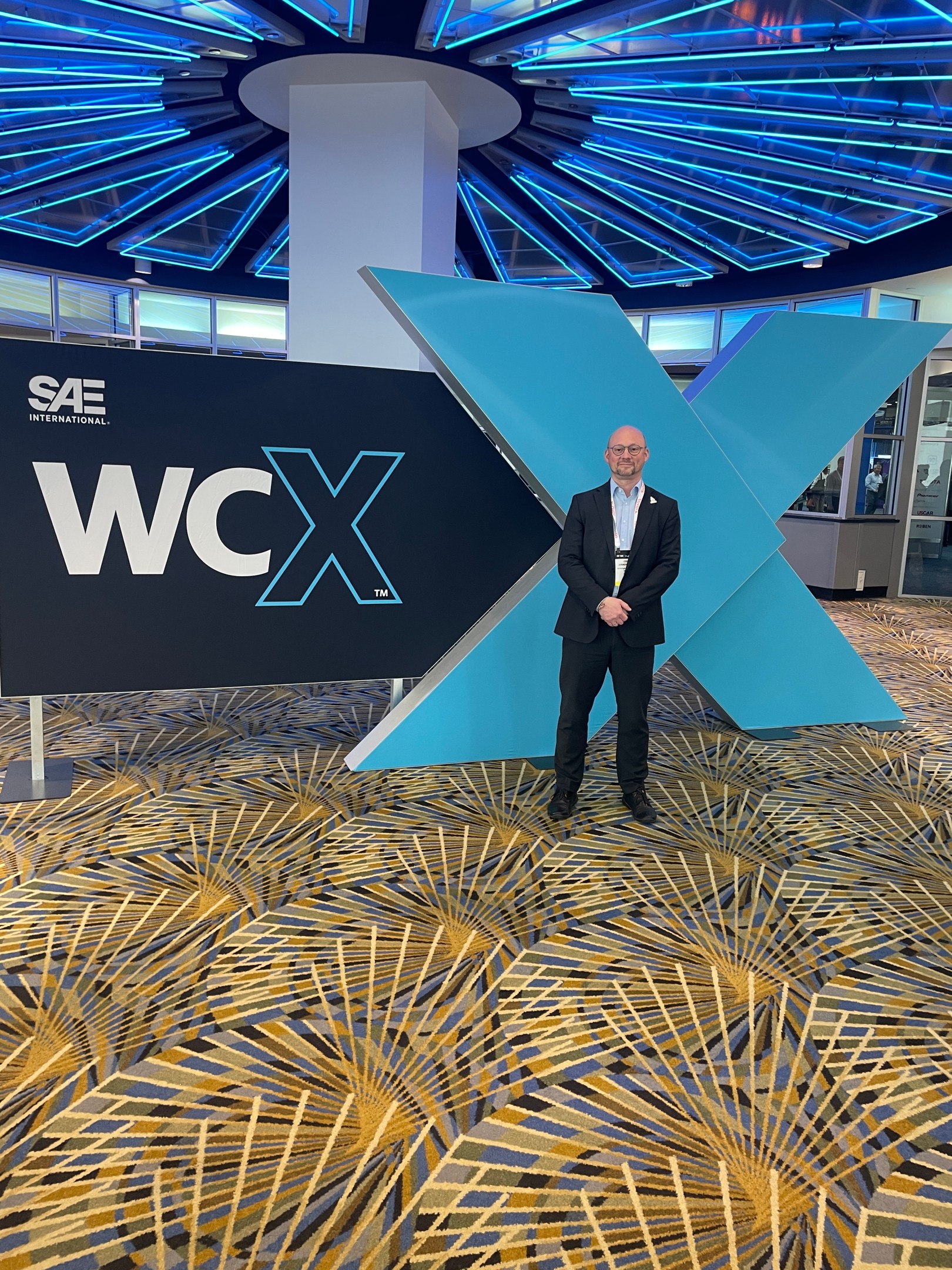
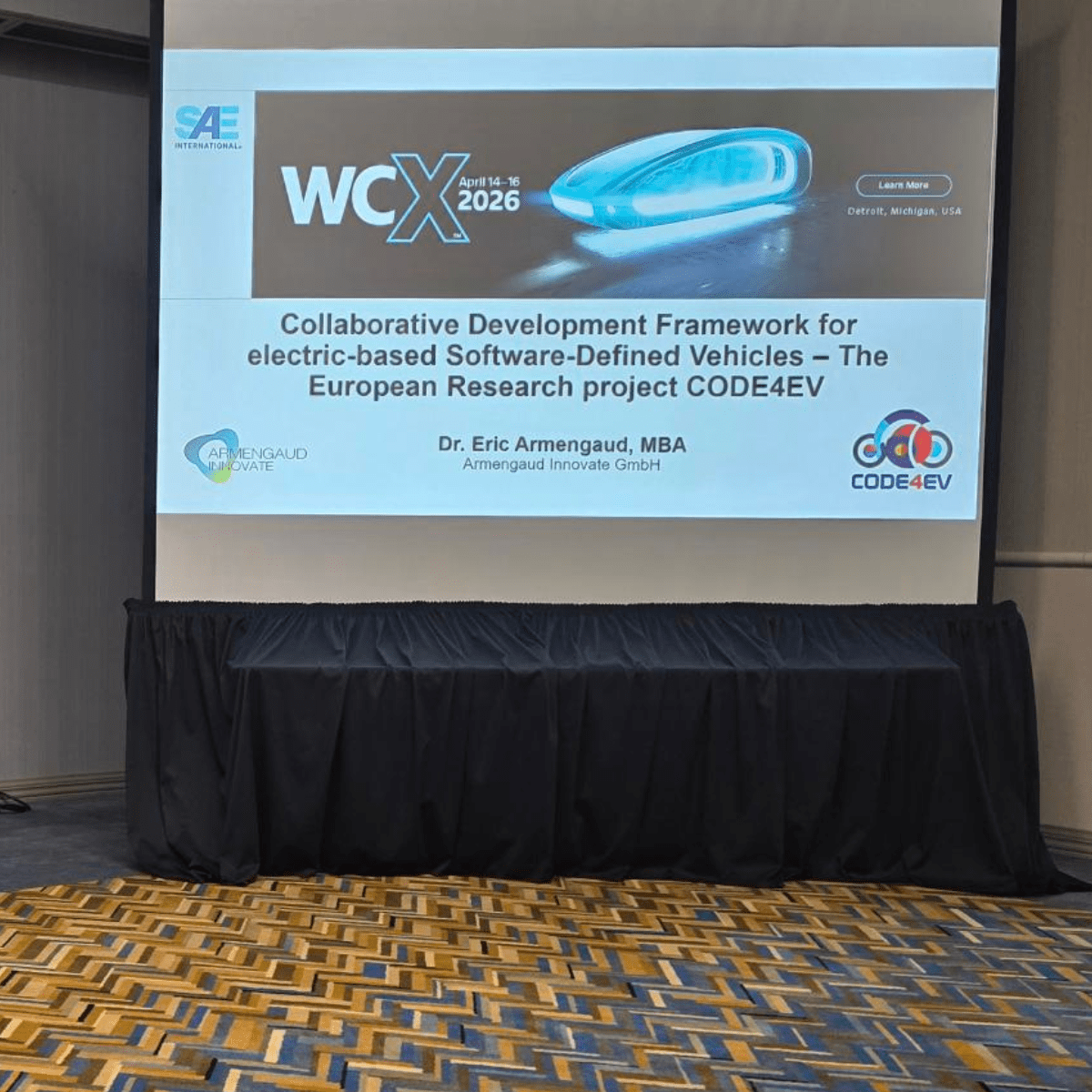
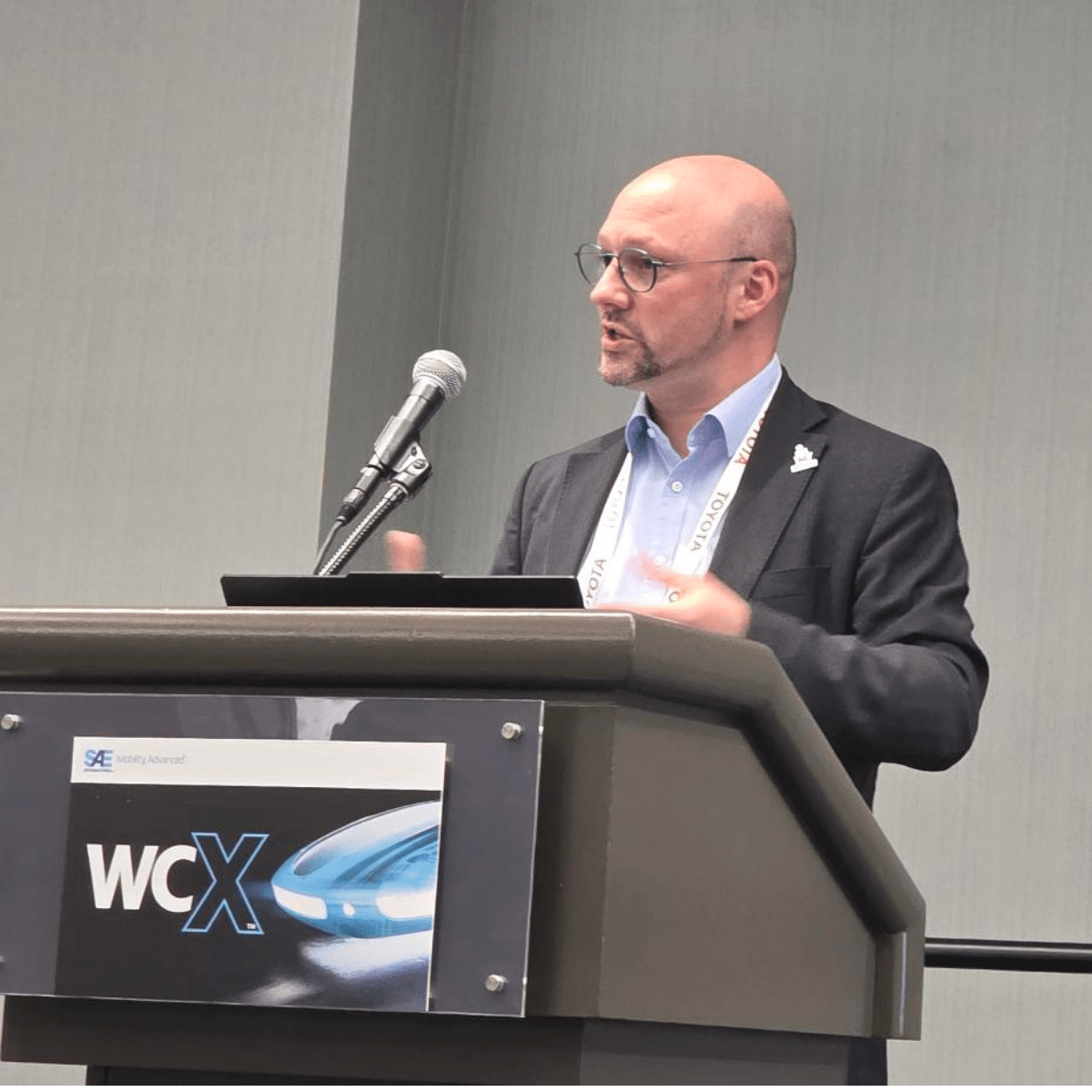
At SAE WCX 2026, CODE4EV had the opportunity to present the CoDe framework in a dedicated technical session on Software‑Defined Vehicles (SDV). The paper created by consortium was presented by Eric Armengaud and brought together experts from across the automotive ecosystem to discuss current developments and future directions in SDV engineering. The discussion highlighted the rapid pace at which Software‑Defined Vehicle concepts are transforming vehicle development worldwide. What was once considered a regional or exploratory approach has clearly evolved into a globally adopted strategy, driven by the need to accelerate software‑based and data‑driven innovation while managing increasing system complexity.
Several key technical and organizational insights emerged from the session:
- Global adoption of SDV concepts
Software‑Defined Vehicle strategies are no longer limited to specific regions. They have become a global approach to accelerating innovation through software and data. - Consistency across development and CI/CD processes
Maintaining consistency throughout development workflows, particularly within continuous integration and continuous deployment (CI/CD) pipelines, is critical to ensuring scalability, quality, and reliability. - Integrated systems, software, and safety engineering
Model‑based systems engineering, software engineering, and safety engineering play a crucial role in explicitly defining components, vehicle attributes, targets, and their interdependencies. This transparency significantly reduces development risks and certification effort. - Frontloading through realistic environments
The ability to operate models and components in realistic, executable environments at early development stages enables effective design space exploration and substantially accelerates development timelines. - AI as a transformational enabler
The use of artificial intelligence across development, validation, release, and advanced control strategies represents a major step forward. At the same time, robust guarantees for safe and secure operation remain essential.
The session clearly underlined that mastering SDVs is not about adopting a single technology. Instead, it requires the combination of robust engineering methods, scalable development processes, and intelligent tooling, applied consistently across the entire vehicle lifecycle.
We would like to thank the session organizers and all participants for the insightful discussions and the highly engaging exchange.
 Collaborative Development Framework for Electric Software-defined Vehicles